Imbolc. In the belly.
A time that the Celts believed represented the end of the cold stagnant winter and the transition to warm weather, fertility and vitality.
The period of rest and reconstruction has passed, and it is time now to activate ourselves again.
A time of rebirth, purification and a new beginning. It coincides with the Christian Lent and the early period of carnival.
And what does carnival symbolize?
In this purificatory period we are called to escape from the social compromises, to take off the acquired mask that is in compliance with the social norms, and to express a wild primal side of ourselves. To give voice to a part of the real self, the one that speaks the truth of what we want, taking a time off the masked outward form.
In the end of this process there is a symbolical “burning” of a figure which represents “bad features”, helping us to “purify” and make a new beginning. Purification in the cycle of the seasons is not associated with a puritan-type cleanliness, but a sense of being in a clarity that allows seeing closer to the truth, as children do (who align with the playful and messy spirit of carnival).
The tradition of Imbolc follows winter, the hardest season of the year which represented hardships for rural people (“bad features”, stagnations etc). Hardships or “evil” to be burned. In some places in Greece, there are several ancient customs taking place at the 12th day of Christmas, an early beginning of carnival fires and rituals.
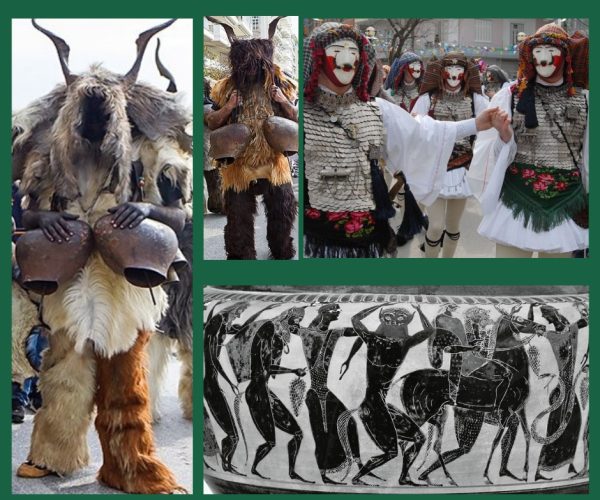
What happens during winter gestation period? Organisms that were functional organically, after letting parts of themselves go during autumn, transform to a new organic form for the new spring period.
Which are the first flowers to bloom and when is the sign that winter period is over?
“Μες στα βάθη του χειμώνα φάνηκε μια ανεμώνα” says the greek folk proverb.
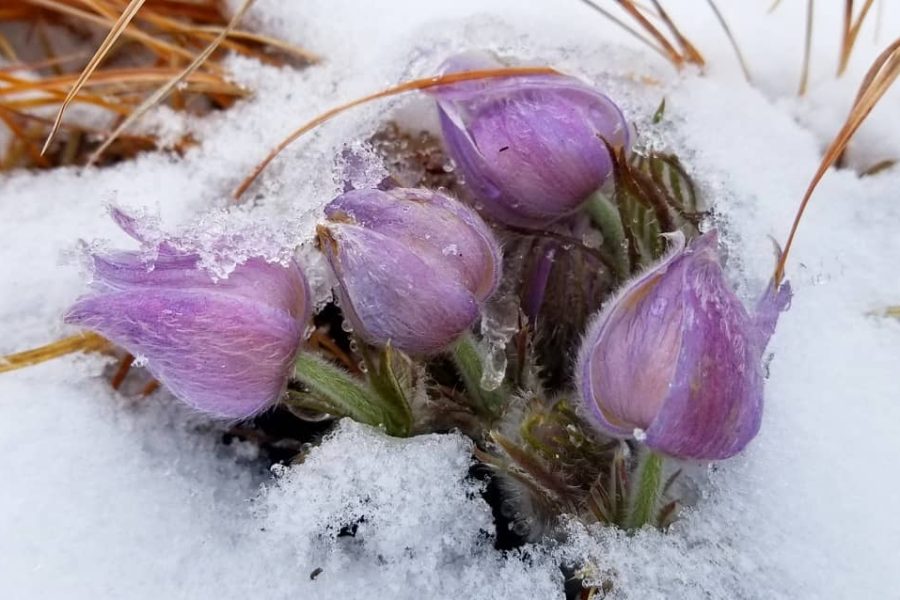
In nature the bringing of a lighter period is manifested with the presence of courageous wildflowers emerging in early spring. Very humble organisms, without conceit, with an ethereal quality of hope and joy, delicate, are emerging from the snow. They are the first ones crossing a symbolic bridge of the seasons!
They express their strength not through a rigorous plant persona full of accomplishments. But by being fully aware of the hard weather conditions, expressing their vulnerability of existence and at the same time trusting and allowing themselves to be open to the new season.
Nowadays we tend to exile-scapegoat everything that represents winter, carnival, truthtelling against rulling, real parts of self that do not follow the sterile norms of society. Not accepting “personal winters” and “personal carnivals” would be analogous with accepting only those qualities (personal & collective) that are in compliance with norms.
For some of us, the path to worthiness is not through a social darwinism & false-wellness attitude where “whoever maximizes individual interest helps others as well because we are all connected”. There is a pandemic spreading out there, a pandemic of non-relationships. How can we keep relationships real when we do not engage in Imbolc spirit with a wild humbleness?
Winter wildflowers of Imbolc season are just there, with their presence and light.
Humble, accepting of winter’s nature, and with the courage to show up.
Blessed Imbolc!